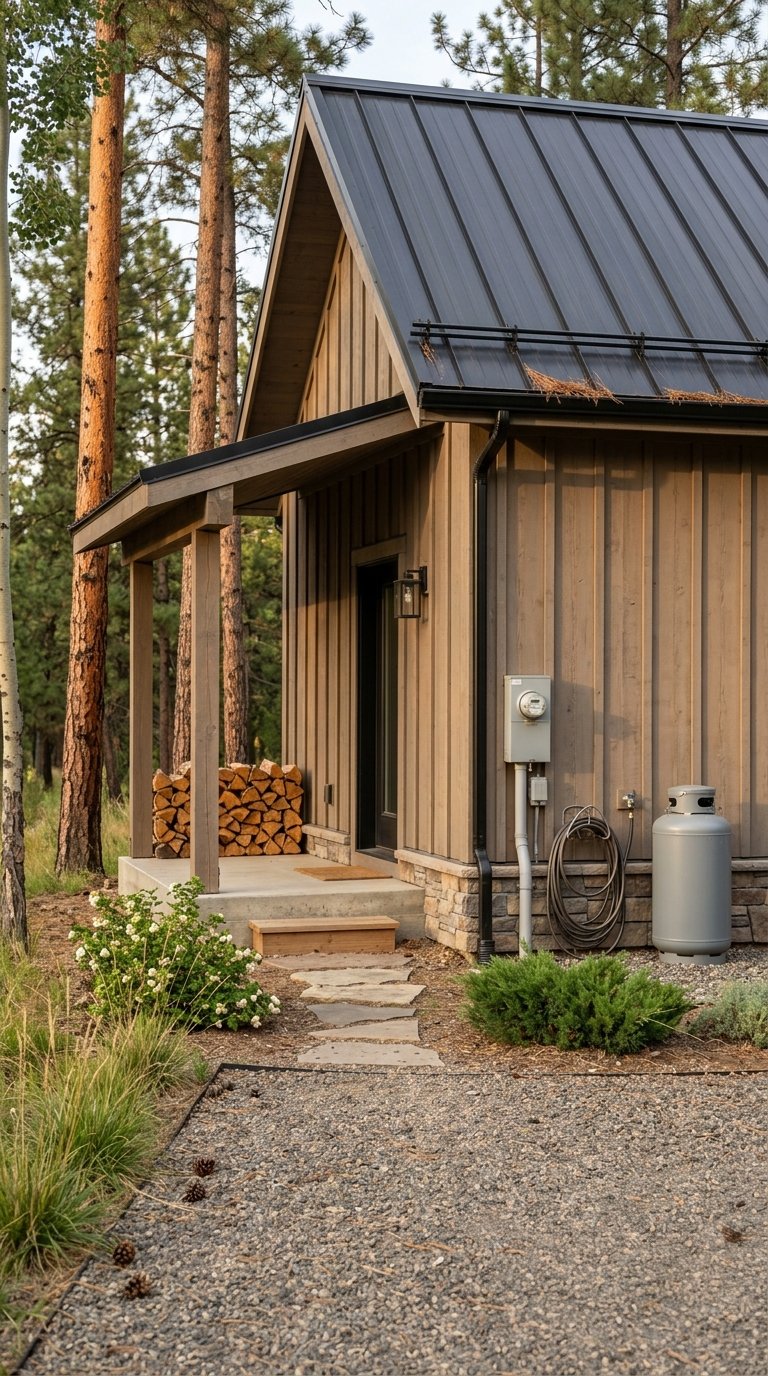
Dreaming about a cabin near Nemo with room to breathe? It is easy to fall for the trees, the views, and the quiet first. But when you buy rural property in the Black Hills, the real value often comes down to what the land can legally support, how you access it, and whether key systems are already in place. This guide will help you look past the charm and focus on the details that matter most before you buy. Let’s dive in.
Why rural property needs a closer look
Buying cabins and acreage around Nemo is different from buying an in-town home. In unincorporated Lawrence County, Planning & Zoning handles permits, inspections, plats, septic systems, floodplain administration, and zoning enforcement.
That means your biggest questions may not be about paint colors or flooring. Instead, you want to know whether the parcel is buildable, accessible, and serviceable for the way you plan to use it.
Check whether the lot is buildable
A beautiful parcel is not always a build-ready parcel. Before you move forward, confirm that the land can support your plans now and later.
In Lawrence County, any lot under 40 acres must be platted before a building permit can be issued. The county also issues a permit for only one dwelling per lot, subject to zoning density limits.
If you are thinking about adding onto an existing cabin, building a garage, or placing another structure on the property, this matters right away. Your future plans should match what the county will allow.
Ask about platting first
If the parcel is under 40 acres, ask whether it is already platted. If it is not, find out what would be required to complete that step before you count on building or expanding.
This is one of the easiest issues to miss when you are focused on the cabin itself. A property can feel perfect in person and still create delays if the paperwork is not in order.
Review setbacks and site layout
A strong site plan should show property lines, lot dimensions, existing and proposed structures, wells, septic systems, drainfields, waterways, driveways, utilities, easements, and rights-of-way. That information helps you understand how much usable space you truly have.
Lawrence County may also ask for a lot survey to verify setbacks. In some areas, the county may require a soils report before footing work.
Understand permit rules before you buy
In rural property, permit history matters. Lawrence County requires building permits for new construction, additions, decks, replacement decks, and moved buildings, including mobile homes.
You can also run into confusion with smaller outbuildings. County sources differ on the threshold for permit-free small structures, with one source citing 144 square feet and the current FAQ citing 200 square feet. Before you assume a shed, small cabin, or accessory building is exempt, confirm the county’s current interpretation.
If the seller added structures over time, ask whether the work was properly permitted. That can save you from surprises after closing.
Verify legal and practical access
A rural road can look fine on a sunny afternoon and feel very different in January. Around Nemo, access deserves its own careful review.
New driveways, approaches, or access points from a county or state road require the proper permit before the county will issue a building permit. County forms also state that utilities or approaches in a county right-of-way need county approval before installation.
County-maintained road or private road?
This is one of the most important questions to ask. Lawrence County’s Highway Department maintains county roads, including snow removal, sanding, grading, and road repair, but it does not maintain municipal roads, U.S. highways, state roads, or Interstate 90.
For a cabin or acreage parcel, you should confirm whether access is county-maintained or private. Legal access is important, but winter access and road maintenance can affect your day-to-day use just as much.
Look closely at septic systems
Septic is not a side detail on rural property. It is one of the first systems you should investigate.
Lawrence County requires a septic permit first, then a Registered Professional Engineer design before a building permit can be issued. The county also states that wastewater systems must be installed by state-licensed installers and inspected by the designing engineer.
For buyers, the county permit packet gives you a practical checklist. Ask for the septic permit number, the system design, and the date of the last pumping for an existing system.
Septic records to request
Ask the seller for:
- Septic permit number
- Engineer-designed septic plans
- Installer information
- Date of the last pumping
- Any repair or maintenance records
These documents can help you understand the age, compliance, and condition of the system before you take ownership.
Test and verify the well
Water is another major piece of the puzzle. South Dakota allows reasonable domestic use of water without a Water Management Board permit, and domestic users other than water distribution systems may register a domestic well.
Still, every new domestic well drilled in South Dakota must be sampled for bacteria and selected chemicals. The state recommends retesting bacteriological quality at least annually and after heavy rains, snowmelt, or flooding.
What well information matters most
For a Nemo-area property, ask for the latest well test results and the well driller’s information. The required sample for a new domestic well includes:
- Nitrate
- Coliform bacteria
- Sodium
- Conductivity
- Sulfate
The state also says a well driller must be licensed unless the owner is drilling their own well. If the records are incomplete, that is a sign to slow down and gather more information.
Confirm utility service early
Do not assume electric service is simple just because nearby properties have power. In South Dakota, electric service is territory-based.
The South Dakota Public Utilities Commission keeps service-territory boundaries on file, and buyers should verify the parcel’s electric provider before closing. Around the Black Hills, this can affect how you plan for service, upgrades, or future improvements.
If you are looking at raw land or a cabin that feels more off-the-grid, this question becomes even more important. Early verification can prevent delays and help you budget more accurately.
Watch for floodplain issues
A creek, drainage area, or low-lying section can add beauty to a property, but it can also affect what you can do with it. In Lawrence County, if the Floodplain Administrator determines a property is in the FEMA floodplain, the owner may need a detailed flood study or elevation information before a building permit is issued.
The county also states that some properties may be considered unbuildable. Even work that does not otherwise need a building permit can still require a floodplain development permit.
If a parcel has water nearby, ask about floodplain status early. That is much better than finding out later that your renovation or addition plans are limited.
Ask about wildfire mitigation requirements
In the Black Hills, trees and privacy often go hand in hand. But wooded property can also come with added planning requirements.
Lawrence County’s permit packet says some lots approved or platted on or after September 15, 2010 may require a Wildfire Mitigation Plan or Survivable Space Plan. If you hope to keep dense trees close to the cabin, expand the homesite, or add another structure, this is worth reviewing before you buy.
A property can still be a great fit, but you want clear expectations about what may be required down the road.
Pay attention to nearby agricultural use
When you buy acreage, you are also buying into the realities of the surrounding area. Lawrence County’s permit notice warns that nearby agricultural land may involve lawful farm operations that create noise, odors, fumes, dust, smoke, vibrations, insects, rodents, and machinery running at all hours.
Agricultural operations may also expand over time. That does not make a property better or worse, but it does mean you should make sure the setting fits your lifestyle and expectations.
A smart buyer checklist for Nemo cabins and land
Before you commit to a cabin or acreage property around Nemo, ask these questions:
- Is the lot already platted?
- If it is under 40 acres, what is needed before a building permit can be issued?
- Is there legal access, and is the road county-maintained or private?
- Does the driveway or approach need county approval?
- What septic permits, designs, and pumping records are available?
- What are the latest well test results?
- Who serves the parcel for electric power?
- Is any part of the property in a floodplain?
- Could wildfire mitigation or survivable space rules apply?
- Are nearby agricultural uses likely to affect daily enjoyment or future plans?
Why local guidance matters
Cabins and acreage around Nemo can be rewarding purchases, but they ask more of you as a buyer. You are not just evaluating a home. You are evaluating land use, access, utilities, records, and future flexibility.
That is where steady local guidance can make a real difference. When you know the right questions to ask upfront, you can move forward with more confidence and fewer surprises.
If you are considering a cabin or acreage purchase around Nemo, Sandra Donahue can help you sort through the property details, ask practical questions early, and take the next step with clarity.
FAQs
What should you check before buying acreage around Nemo, South Dakota?
- Confirm whether the lot is platted, whether it is buildable, how access works, what utilities are available, and whether septic, well, floodplain, or wildfire requirements could affect your plans.
Does a Lawrence County cabin property need to be platted before you can build?
- In Lawrence County, any lot under 40 acres must be platted before a building permit can be issued.
What septic records should you request for a Nemo-area cabin?
- Ask for the septic permit number, engineer design, installer information, and the date of the last pumping, along with any maintenance or repair records available.
Why does road access matter when buying rural property near Nemo?
- You need to know both legal access and practical access, including whether the road is county-maintained or private and whether a driveway or approach requires county approval.
How do you verify utilities for acreage in the Nemo area?
- Verify the electric provider before closing because electric service in South Dakota is territory-based, and do not assume service details based on nearby parcels alone.
Can floodplain rules affect a cabin purchase in Lawrence County?
- Yes. Floodplain status can affect permits, renovations, and buildability, and some properties may require added studies or be considered unbuildable.